What Custom Steel Carabiner is Right for You? A Comprehensive Guide
Choosing the right equipment for climbing, industrial use, or even daily tasks is critically important for safety and efficiency. Among these essential tools, carabiners stand out for their versatility and strength. But with so many types available, how do you pick the perfect Custom Steel Carabiner for your needs?
Whether you're a seasoned climber, an outdoor enthusiast, or someone who simply needs a reliable connector, understanding the nuances of different carabiners is key. Let's dive into the world of Custom Steel Carabiners and explore their features, uses, and why making an informed choice truly matters.
Key Takeaways
- Locking vs. Non-Locking: Locking carabiners are essential for life-safety applications like belaying and building anchors, offering maximum security. Non-locking carabiners are lighter and quicker to use, making them ideal for racking gear and in quickdraws where speed is a priority.
- Locking Mechanisms: Manual screw-lock carabiners are simple and reliable in harsh conditions. Auto-locking types (twist-lock, triple-lock) provide added safety by locking automatically, which is ideal for frequent use or when you can't easily check the gate.
- Shape Matters: The shape of a carabiner—Pear, D-shaped, Offset D, or Oval—dictates its best use. D-shapes are strongest, Pears are best for belaying, and Ovals distribute loads evenly for use with pulleys.
- Why Steel?: While heavier than aluminum, steel carabiners offer superior durability, abrasion resistance, and a higher load capacity, making them indispensable for industrial rigging, rescue operations, and high-wear applications.
- Safety First: Always use carabiners that meet industry standards (like UIAA and CE). Regular inspection for wear, cracks, or gate-action issues is non-negotiable for ensuring your gear remains trustworthy.
Understanding the Basics of Your Custom Steel Carabiner: Locking vs. Non-Locking
Carabiners can be broadly categorized into two main groups: locking and non-locking. The difference may seem simple, but it's the single most important factor in determining the right carabiner for your application. Choosing correctly is a matter of safety, efficiency, and peace of mind.
The Security of a Locking Custom Steel Carabiner
A locking carabiner is defined by a gate that can be secured in a closed position, providing a crucial defense against accidental opening. This mechanism prevents the gate from being pushed open by rope vibration, rubbing against a rock, or interacting with other gear, which could otherwise lead to catastrophic failure.
When to Choose a Locking Custom Steel Carabiner
The golden rule is simple: if a single carabiner's failure could lead to a serious outcome, it must be a locking one. These are indispensable for any critical point in a safety system. Use a locking carabiner for:
- Belaying and Rappelling: The constant rope movement requires a secure, locked connection between the belay device and your harness.
- Building Anchors: The master point of any anchor, where all forces converge, must use a locking carabiner to ensure the system's integrity.
- Personal Anchor Systems (PAS): When attaching yourself directly to an anchor, a locker is non-negotiable for personal safety.
- Top-Roping Setups: To ensure the anchor remains secure and unattended, it's standard practice to use two locking carabiners oriented with their gates opposite and opposed.
- Industrial and Rescue Operations: In any work-at-height or rescue scenario, locking carabiners are mandatory for connecting to harnesses, anchors, and other safety equipment.
Types of Locking Mechanisms in Custom Steel Carabiners (Screw Lock, Twist Lock, Auto-Lock)
Locking carabiners are not a one-size-fits-all solution; they feature different mechanisms, each with its own balance of security, speed, and ease of use.
| Locking Type | Description | Pros | Cons |
|---|---|---|---|
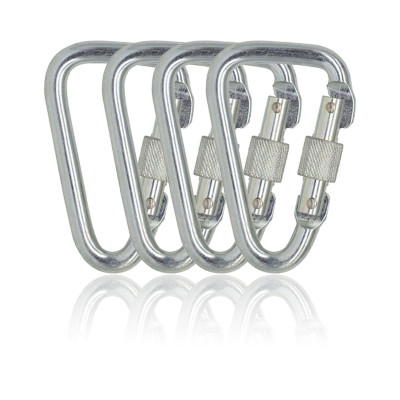
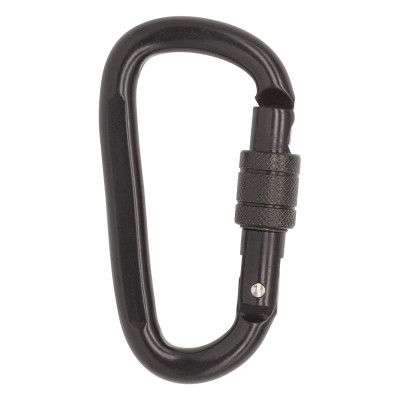
| Screw Lock (Manual) | A threaded sleeve that you manually twist to lock the gate. A visual red indicator often warns when it's unlocked. | Simple, lightweight, reliable in dirty or icy conditions, and easy to use with one hand. | Can be forgotten to be locked (human error); vibrations can potentially cause it to unscrew over time. |
| Twist Lock (2-Stage Auto-Lock) | The sleeve automatically locks when the gate closes. To open, you must twist the sleeve and then open the gate. | Locks automatically (no forgetting); faster to operate than a screw lock. | Can potentially be opened by rubbing against rock or gear in a specific way; can be harder to use one-handed. |
| Triple Lock (3-Stage Auto-Lock) | Requires three distinct actions to open, such as slide up, twist, and then open the gate. | Extremely secure, virtually impossible to open accidentally, making it ideal for maximum safety scenarios. | Requires more practice to operate efficiently with one hand; can be slower to use. |
Auto-locking carabiners were developed specifically to address the human error of forgetting to lock a manual screw-gate. However, the simplicity and reliability of a screw-lock in harsh environments where an automatic system might jam make it a continued favorite for many applications.
The Convenience of a Non-Locking Custom Steel Carabiner
Non-locking carabiners feature a simple spring-loaded gate that snaps shut automatically. Their primary advantages are that they are lighter, less bulky, and much quicker to clip and unclip.
Ideal Scenarios for Non-Locking Custom Steel Carabiners
These carabiners are best used in situations where speed and efficiency are priorities and where the system has redundancy, meaning the failure of one component would not be catastrophic. Common uses include:
- Quickdraws: On sport climbing routes, quickdraws connect the rope to bolts. Since multiple quickdraws are used, the system has inherent redundancy.
- Racking Gear: Organizing and carrying climbing protection like cams and stoppers on your harness is a perfect job for lightweight non-lockers.
- Alpine Draws: For extending placements on wandering routes, climbers often use a sling with two non-locking carabiners.
- Non-Critical Attachments: Hanging shoes, a water bottle, or other accessories from your pack or harness.
In short, use lockers when you must, and non-lockers when you can for greater efficiency.
Understanding Gate Styles: Solid Gate vs. Wire Gate Custom Steel Carabiners
Non-locking carabiners also come in different gate styles, primarily solid and wire gates.
Solid Gate Carabiners: These feature a gate made of solid metal with a spring mechanism inside. They are often available in "straight" and "bent" gate versions. A straight gate is the standard all-purpose choice, while a bent gate has a concave shape that makes clipping a rope in easier, making it ideal for the rope-end of a quickdraw. Solid gates give a satisfying "snap" and are highly durable against abrasion.
Wire Gate Carabiners: A wire gate uses a loop of stainless steel wire for the gate. This design offers three key advantages:
- Lighter Weight: The reduced mass makes them significantly lighter, a huge benefit when carrying a lot of gear.
- Less Prone to Freezing: The minimalist design has less surface area for ice to form on, making them more reliable in alpine or ice climbing conditions.
- Reduced Gate Flutter: Due to their lower mass, wire gates are less susceptible to oscillating open during a fall, which can momentarily reduce a carabiner's strength.
While wire gates are the gold standard for lightweight performance, highly durable solid gates remain a top choice for environments with a lot of rock abrasion.
Finding the Perfect Fit: Shapes and Sizes for Your Custom Steel Carabiner
Beyond the locking mechanism, the shape and size of a carabiner are crucial design elements that dictate its strength, handling, and ideal application. Each shape is engineered to perform a specific job exceptionally well, and understanding these differences will help you build a more effective and safer setup.
Common Shapes of Custom Steel Carabiners and Their Uses
Carabiners come in four primary shapes: Pear (HMS), D-shaped, Asymmetrical D-shaped, and Oval. Choosing the right one ensures that force is distributed correctly and that the tool is easy to handle for the task at hand.
Pear-Shaped Custom Steel Carabiners: Versatility and Wide Openings
Often called HMS carabiners (a German abbreviation for Halbmastwurfsicherung, or Munter hitch belay), pear-shaped carabiners are designed with a large, wide top and a narrower bottom. This shape provides a large gate opening and a broad, smooth rope-bearing surface, making it exceptionally versatile.
- Best For: Belaying and rappelling are the primary uses for pear-shaped carabiners. The wide top allows belay devices and hitches (like the Munter hitch) to function smoothly and helps dissipate heat. They are also excellent as master points in an anchor system, as their large internal volume can easily accommodate multiple ropes, slings, or other carabiners.
- Pros: Very large gate opening, specifically designed for smooth rope management, and versatile for belaying and building anchors.
- Cons: Tend to be heavier and not as strong as D-shaped carabiners because the symmetrical top shares the load between the spine and gate.
D-Shaped Custom Steel Carabiners: Strength and Efficiency
The D-shape is engineered to be the strongest carabiner design. Its asymmetrical form channels the load away from the weaker gate and onto the solid spine—the strongest part of the carabiner. This efficient design means a smaller and lighter D-shaped carabiner can be just as strong as a larger carabiner of a different shape.
- Best For: Most general climbing and rigging applications where maximum strength is paramount. They excel when connecting to protection, as part of quickdraws, and for locking anchor points where load shifting needs to be minimized.
- Pros: The strongest and most durable shape, offering a high strength-to-weight ratio.
- Cons: The gate opening is typically smaller than that of pear or asymmetrical D-shapes, and they can be more expensive than ovals.
Asymmetrical D-Shaped (Offset D) Custom Steel Carabiners: Balancing Strength and Opening Size
The Asymmetrical D-shape, also known as the Offset D or Modified D, is by far the most popular and common carabiner design today. It is a variation of the classic D-shape but is smaller at one end to reduce weight while featuring a larger gate opening. This makes them extremely versatile and easy to clip.
- Best For: They are the workhorse of any gear rack and are excellent for nearly every application, including quickdraws, racking gear, and building anchors. The vast majority of a climber's carabiners are likely to be this shape.
- Pros: Excellent balance of strength, low weight, and a large gate opening for easy handling.
- Cons: Not quite as strong as a true D-shape and generally more expensive than ovals.
Oval Custom Steel Carabiners: Even Load Distribution and Affordability
The oval is the original carabiner shape. Its smooth, perfectly symmetrical curves limit load shifting by keeping the weight centered. While they are not as strong as D-shaped carabiners (because the load is shared equally between the spine and the gate), their uniform shape makes them indispensable for specific setups.
- Best For: Aid climbing, racking gear (especially nuts/stoppers, which don't get jammed in corners), and use with pulleys or progress-capture devices, as the symmetrical shape allows the device to sit perfectly aligned. Their predictable alignment also makes them suitable for carabiner-brake rappels.
- Pros: The symmetrical shape prevents load shifting, they are affordable, and they excel when used with pulleys and other specialized gear.
- Cons: Weakest of the common shapes and typically have a smaller gate opening.
Choosing the Right Size for Your Custom Steel Carabiner
Carabiner size is more than just a matter of preference; it directly impacts handling, weight, and capacity. The choice between a smaller or larger carabiner depends entirely on the intended use.
Small Custom Steel Carabiners: Lightweight and Space-Saving
Smaller carabiners are prized for being exceptionally lightweight and taking up minimal room on a gear rack. This makes them the top choice for alpine climbers, multi-pitch climbers, and anyone looking to minimize the weight of their kit. However, this weight saving comes with trade-offs. Superlight carabiners can be harder to handle, especially with gloves on, and their small gate opening can make clipping feel difficult. They may also wear out faster due to having less material.
Large Custom Steel Carabiners: Accommodating Bulkier Equipment
Large carabiners are generally easier to handle and have wider gate openings, which makes clipping ropes, hitches, and gear much easier. They are the standard for belay and rappel applications, as their spacious interiors can accommodate multiple ropes or bulky knots. While they are heavier and take up more space, their ease of use in critical situations often outweighs the extra grams. A carabiner with a generous gate opening is especially useful when you need to clip multiple items or are working in conditions that require gloves.## Key Features and Considerations for Your Custom Steel Carabiner Investment Making an informed investment in a custom steel carabiner means looking beyond the basic shape and lock. The material, gate design, and safety certifications are all critical features that determine a carabiner’s performance, durability, and, most importantly, its reliability when you need it most.
Material and Strength: Why a Custom Steel Carabiner is a Top Choice
While aluminum carabiners are popular in recreational climbing due to their light weight, steel is the undisputed champion of strength and durability. For heavy-duty applications, a custom steel carabiner is often the only appropriate choice. At KINSAFETY, our philosophy is built on providing the most durable and reliable equipment for our users. This commitment to safety and quality is at the core of our identity. You can learn more About KINSAFETY and our material selection process on our website.
Durability and Load Capacity of Custom Steel Carabiners
Steel carabiners are known for their exceptionally high strength and resistance to wear and tear. They can withstand heavy loads, repeated impacts, and abrasive environments without deforming, giving them a much longer lifespan than aluminum alternatives. Heavy-duty steel carabiners can have a minimum breaking strength (MBS) rated as high as 40 kN, 50 kN, or even 70 kN, making them essential for industrial rigging, rescue operations, and applications with extreme forces.
The Benefits of Steel Over Aluminum for Specific Applications
The decision to use steel over aluminum comes down to balancing weight against strength and longevity.
| Feature | Steel Carabiner | Aluminum Carabiner |
|---|---|---|
| Strength & Durability | Superior. Highly resistant to wear, abrasion, and deformation. Higher load capacity. | Good, but wears faster. More prone to developing grooves from rope friction and can be damaged by impacts. |
| Weight | Heavier. This can be a disadvantage when carrying a large amount of gear a long distance. | Exceptionally lightweight, which is a major advantage for activities like sport and alpine climbing. |
| Best Applications | Industrial rigging, rescue, high-use anchors (e.g., in a climbing gym), and any environment with high abrasion or heavy loads. | Recreational climbing, mountaineering, and any activity where minimizing gear weight is a top priority. |
| Corrosion Resistance | Can be prone to rust if not cared for properly, especially in saltwater environments, although many are zinc-plated for protection. | Highly resistant to rust and corrosion, making them suitable for use in various weather conditions. |
In essence, for activities where absolute strength, resistance to damage, and long-term durability are more critical than saving a few grams, steel is the superior material.
Gate Mechanisms in Custom Steel Carabiners: Straight, Bent, and Wire Gates
The gate is the part of the carabiner that opens to allow rope or gear to be clipped in. In non-locking carabiners, the gate design plays a significant role in handling and ease of use.
- Straight Gate: This is the classic, all-purpose gate. It's strong, durable, and found on a wide variety of carabiners. Its simple, straight design from the hinge to the nose makes it reliable and cost-effective.
- Bent Gate: A bent gate has a concave shape that helps guide the rope into the carabiner, making clipping faster and easier. For this reason, they are almost exclusively used on the rope-end of quickdraws.
- Wire Gate: Instead of a solid piece of metal, a wire gate uses a loop of steel wire. This design is lighter, less likely to freeze shut in icy conditions, and reduces the chance of "gate flutter" (a dangerous phenomenon where the gate can vibrate open during a fall).
A key innovation in gate design is the keylock nose. Instead of a hooked notch where the gate meets the nose, a keylock system uses a smooth, puzzle-piece-like interface. This snag-free design is a major advantage, as it prevents the carabiner from catching on bolt hangers, ropes, or gear loops, ensuring smoother clipping and unclipping.
Prioritizing Safety and Compatibility with Your Custom Steel Carabiner
Your life and the integrity of your systems depend on the reliability of your carabiners. Understanding and adhering to safety standards is not optional.
Checking Industry Standards and Certifications for Your Custom Steel Carabiner
Always ensure your carabiners are certified by recognized bodies. The two most important certifications to look for are:
- CE (Conformité Européenne): This mark indicates that the product meets the health and safety standards required for sale in the European Economic Area (for carabiners, this is standard EN 12275).
- UIAA (International Climbing and Mountaineering Federation): This is a voluntary international certification that often has standards that meet or exceed the CE requirements.
A carabiner with a CE and/or UIAA stamp guarantees that it has passed rigorous, standardized tests for strength and safety. These ratings, measured in kilonewtons (kN), are marked on the spine for three different load directions: major axis (lengthwise), minor axis (sideways), and gate-open. Never use an unrated or knock-off carabiner for any safety-critical application.
The Importance of Regular Inspection and Maintenance for Custom Steel Carabiners
Proper care will prolong the life of your gear and ensure its reliability. Routine inspection and maintenance are essential.
Inspection: Before each use, perform a visual and functional check:
- Body: Look for cracks, excessive wear, deep grooves, sharp edges, or corrosion. Hairline cracks can significantly reduce strength.
- Gate Function: The gate should open smoothly and snap shut completely on its own. The locking mechanism should engage and disengage without sticking.
- Rivets and Alignment: Ensure rivets are not loose or bent and that the gate aligns correctly with the nose.
- Deformation: If the carabiner is bent or deformed in any way, retire it immediately.
Maintenance:
- Cleaning: Clean dirty or sticky gates with warm water and a mild detergent, using a soft brush to remove grime from the hinge area.
- Lubrication: After cleaning and drying thoroughly, apply a dry, wax-based lubricant to the hinge and locking mechanism. Wipe off any excess. Avoid lubricants that can attract dirt.
- Storage: Store carabiners in a dry, cool place away from chemicals, salt air, and direct sunlight.
Retirement: Retire a carabiner immediately if it has been dropped a significant distance, shows any cracks or deformation, has significant wear (such as deep grooves from rope), or if the gate or locking mechanism does not function properly. When in doubt, it's always safer to retire it.
Beyond the Basics: Specialized Uses for Your Custom Steel Carabiner
While many associate carabiners strictly with climbing, their utility extends far beyond the vertical world. Thanks to their strength and reliability, custom steel carabiners have found indispensable roles in a range of specialized activities, from kayak fishing to industrial rigging and everyday tasks. Their robustness makes them the go-to choice when failure is not an option.
Custom Steel Carabiners in Kayak Fishing: Anchorage and Gear Management
In the dynamic environment of kayak fishing, secure and efficient gear management is crucial. A dropped rod or a drifting anchor can ruin a day on the water. Locking steel carabiners offer a foolproof solution for securing expensive gear and managing your position.
Integrating Your Custom Steel Carabiner into an Anchor Trolley System
An anchor trolley is an essential safety feature for any fishing kayak, allowing you to adjust the anchor point from the bow to the stern without leaving your seat. This lets you safely position your kayak relative to wind and current. A stainless steel locking carabiner is the ideal connection point on this trolley. Its ability to lock prevents your anchor line from accidentally detaching, while the steel construction resists corrosion, especially in saltwater environments. By clipping your anchor line into a sturdy carabiner on the trolley, you can easily deploy, adjust, and retrieve your anchor with confidence.
Using Custom Steel Carabiners for Rod Rests and Storage Crates
Losing hundreds of dollars worth of rods and reels is a painful lesson many anglers learn the hard way. Simple tethers made from cord and a locking carabiner can prevent this. By attaching a carabiner from your rod or paddle to a secure point on the kayak, your gear stays with you even if the kayak flips. Steel carabiners are also perfect for securing milk crates or tackle bags, which are often used for onboard storage. Using bungee cords or straps paired with strong carabiners ensures that your tackle boxes and other essential gear remain firmly in place, no matter how rough the water gets.
Advanced Applications and Versatility of Custom Steel Carabiners
The superior strength and durability of steel make it the preferred material for technical, industrial, and high-consequence scenarios.
Custom Steel Carabiners for Technical Climbing and Rescue Operations
In technical climbing, high-angle rescue, and industrial rope access, the working loads can be significantly higher and more complex than in recreational climbing. Steel carabiners are the standard for these applications due to their exceptional strength, durability, and resistance to deformation under heavy, repeated use. Rescue teams, fire departments, and industrial riggers rely on steel carabiners for building anchors, rigging hauling systems, and connecting to litters or personnel. Their ability to withstand forces of 40 kN or more provides a critical safety margin where human lives are on the line. While heavier than aluminum, the unmatched reliability of steel makes it the only choice for these demanding environments.
The Adaptability of Custom Steel Carabiners in Industrial Rigging and Everyday Tasks
The utility of the steel carabiner doesn't stop with life-safety applications. In industrial settings, heavy-duty steel carabiners are used for lifting equipment, securing loads, and creating semi-permanent connection points. Their zinc-plated or stainless steel construction provides excellent corrosion protection, and their keylock gates prevent snagging on ropes and fabrics.
Beyond the job site, a strong steel carabiner has hundreds of practical everyday uses. They are perfect for:
- Organizing and carrying heavy grocery bags.
- Hanging tools, hammocks, or even plants.
- Creating a secure leash point for a pet.
- Keeping electrical cords or hoses neatly looped.
- Securing gates or locking food containers in a barn or campsite.
Their simple, strong, and reliable design makes them one of the most versatile tools you can own for both professional and daily life.
Frequently Asked Questions (FAQ)
Q: Can I use any steel carabiner for climbing? A: No. Only use carabiners that are specifically rated for climbing and certified by the UIAA and/or CE. Carabiners from a hardware store are not tested for life-safety applications and should never be used for climbing or rigging where failure could cause injury.
Q: How often should I inspect my steel carabiner? A: You should perform a quick visual and functional inspection before every use. A more thorough inspection should be conducted regularly, especially if the carabiner is used frequently or in harsh environments.
Q. What is the main advantage of a steel carabiner over an aluminum one? A: The main advantages are durability and strength. Steel carabiners are far more resistant to wear and tear from ropes and hardware, have a higher load capacity, and are less likely to be damaged from impacts, making them ideal for high-use or high-load situations like industrial rigging, rescue, or fixed anchors.
Q: When should I retire a steel carabiner? A: Retire a carabiner immediately if it shows any signs of cracking, deformation, or significant corrosion that cannot be cleaned. Deep grooves from rope wear, sharp edges, or a gate that doesn't open and close properly are also reasons for retirement. If a carabiner has been dropped from a significant height onto a hard surface, it should be retired, as it could have invisible micro-fractures.
Conclusion
Ultimately, the best Custom Steel Carabiner is the one that perfectly matches your specific needs and ensures your safety. Whether you're navigating the vertical world, rigging heavy loads, or simply organizing your gear for a weekend adventure, the principles remain the same: understand the demands of your task and choose the tool designed for it. From the life-saving security of a locking mechanism to the specialized functions of different shapes, we hope this guide has equipped you with the knowledge to make confident choices.
Remember, whether for critical applications or everyday convenience, investing in a high-quality, certified Custom Steel Carabiner and understanding its proper use is paramount. Your safety is worth the investment in knowledge and top-tier equipment. Happy climbing, adventuring, or whatever your journey entails! Please feel free to share this guide or leave your own tips in the comments below.