The Complete Guide to EN 362 Connectors for Safety Harness Manufacturers (2025 Update)
Introduction
For global safety harness manufacturers, choosing connectors that fully comply with EN 362 is crucial for product certification, international market access, and worker safety. Connectors—including carabiners, snap hooks, D-rings, scaffold hooks, and energy absorption components—are the backbone of every fall protection system.
In 2025, EU buyers, PPE distributors, and OEM harness brands are prioritizing hardware suppliers who demonstrate full EN compliance, documented testing, and reliable production traceability. As a result, understanding EN 362 is no longer optional—it is the minimum requirement for entering the European fall protection market.
This comprehensive guide provides an in-depth explanation of EN 362, key testing parameters, connector categories, common failure points, and how compliant manufacturers like us build hardware that meets or exceeds global safety standards.
1. What EN 362 Covers
EN 362 is the European standard that specifies the safety, design requirements, mechanical strength, testing procedures, and markings for connectors used in fall arrest and work-at-height equipment.
EN 362 applies to:
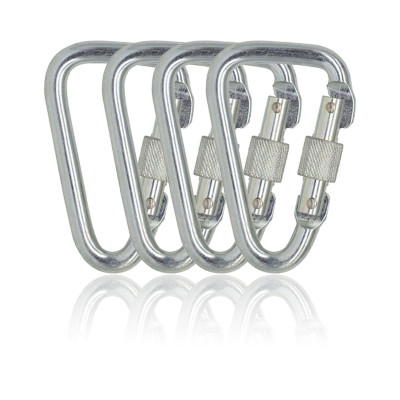
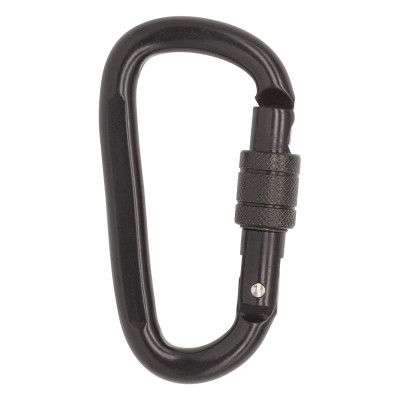
Carabiners
Snap hooks
D-rings
Scaffold hooks
Energy absorbing connectors
Rescue connectors
Multi-directional connectors
Double-action and triple-action locking mechanisms
Its purpose is to guarantee that every connector in a fall arrest system can withstand extreme loads, dynamic forces, environmental conditions, and repeated cycles of use—without failure.
The 3 Major Objectives of EN 362
Prevent accidental opening under load or movement
Ensure mechanical strength under static and dynamic forces
Protect users during fall arrest, positioning, rescue, and rope access operations
Whether a connector is used in a harness, lanyard, positioning belt, rescue system, or rope access gear, EN 362 is the core reference standard for its safety.
2. Connector Categories According to EN 362
EN 362 classifies connectors into specific categories, each designed for different applications.
A – Anchorage Connectors
Used to connect the system to a fixed anchor point.
Examples: large D-rings, fixed scaffold hooks.
B – Basic Connectors (General Carabiners)
Traditional gate-opening connectors used in most PPE systems.
Examples: oval carabiners, aluminum connectors, steel carabiners.
M – Multi-Directional Connectors
Designed to withstand loads in multiple directions.
Q – Quarter-Turn Connectors
Used where quick, secure attachment is needed.
T – Termination Connectors
Used to terminate a lanyard or rope.
K – Scaffold Hooks
Large-opening hooks used on scaffolding or structures.
Each category has unique strength requirements, gate mechanisms, and load-resistance rules. OEM buyers usually choose connector types based on the harness system layout and mechanical loading path.
3. Mechanical Strength Requirements
EN 362 defines precise minimum strength levels to ensure connectors can endure fall arrest forces.
Typical Minimum Breaking Strength (MBS)
| Material | Typical EN Requirement | Typical Range (kN) |
|---|---|---|
| Aluminum Connectors | ≥ 20 kN | 20–30 kN |
| Steel Connectors | ≥ 22 kN | 25–40 kN |
| Scaffold Hooks | ≥ 22 kN | 25–50 kN |
High-strength industrial connectors—especially for rescue or tower climbing—often exceed these minimum values.
Gate Strength Requirements
EN 362 requires connectors to be tested for:
Gate closed strength
Gate open strength
Minor axis strength
Dynamic load performance
The gate-open strength test is especially important because many connector failures occur when the gate is accidentally loaded during use.
4. Gate & Locking Mechanism Requirements
To avoid accidental opening, EN 362 specifies gate design and locking performance.
Accepted Locking Mechanisms
Double-locking (e.g., twist + push)
Triple-locking (e.g., lift + twist + push)
Self-closing / auto-lock gates
Not Accepted
Single-action gates (except very limited categories)
Gates that can open unintentionally by vibration or friction
In practice, most OEM harness manufacturers prefer:
| Application | Recommended Lock Type |
|---|---|
| Rescue | Triple-action auto-lock |
| Work positioning | Double-action |
| General fall arrest | Double or triple-action |
| Industrial lanyards | Auto-lock only |
| Construction & tower climbing | Auto-lock + high gate strength |
As a factory, we ensure every connector’s locking mechanism passes the EN gate function test cycle before approval.
5. EN 362 Testing Procedures (Explained in Detail)
Reliable testing is central to compliance.
1. Static Strength Test
Connectors are pulled gradually until they reach the required breaking strength.
2. Dynamic Fall Test
Simulates a real fall with a test dummy or drop mass.
3. Gate Open Test
Measures strength while the gate is held open—identifying weaknesses in hinge or nose construction.
4. Minor Axis Strength Test
Ensures connector will not break if loaded sideways accidentally.
5. Corrosion Resistance Test
Salt-spray or humidity chambers evaluate performance in harsh environments.
6. Gate Function & Durability Test
Repeated opening/closing cycles ensure long-term usability.
7. Marking Verification
All required permanent markings must be legible and durable.
Our factory uses tensile testing machines, torque/latch testers, salt-spray chambers, and optical inspection systems to verify each batch.
6. Required Markings on EN 362 Connectors
All connectors must have:
Manufacturer name or logo
Model or batch number
EN 362 reference
Year of manufacture
Pictogram showing connector type
Minimum Breaking Strength (MBS)
Directional load indicators (if applicable)
For OEM customers, we also offer:
Laser-engraved private logos
Unique batch traceability codes
Serial numbers for high-end rescue equipment
7. Common Non-Compliance Issues & How to Avoid Them
Even experienced buyers often encounter problems with connectors that appear acceptable but fail EN tests.
❌ 1. Gate opens during vibration or twisting
Often caused by poor locking mechanism design.
❌ 2. Insufficient gate-open strength
Usually due to weak nose/hinge structure.
❌ 3. Incorrect material hardness
Improper heat treatment leads to deformation under load.
❌ 4. Poor corrosion resistance
Wrong coating or insufficient thickness.
❌ 5. Incomplete markings
Missing EN reference or MBS often results in test rejection.
❌ 6. Dimensional inconsistency
Tolerance issues cause fitment failures in OEM harnesses.
How we prevent all these issues
CNC machining for 0.02mm accuracy
Automated gate locking inspection
Material hardness testing for every batch
100% proof-loading before packing
AI-assisted optical inspection
Strict surface treatment quality control
These processes ensure consistent EN compliance across large production volumes.
8. Best Practices for Safety Harness Manufacturers Selecting EN 362 Connectors
OEM harness brands should consider:
1. Application-Specific Strength Requirements
Construction, rescue, electrical, and rope access gear have very different connector needs.
2. Material Choice
Steel = higher strength
Aluminum = lower weight
Dielectric = zero conductivity
3. Locking Mechanism Reliability
Auto-locking is now the global standard.
4. Surface Treatment
Anodizing, electrophoresis, and zinc plating dramatically improve product life.
5. Supplier Testing Capability
Factories must have tensile testers, salt-spray chambers, hardness testers, etc.
6. Customization Ability
Mold opening, engraving, special colors, or custom strength ratings offer competitive advantages.
9. Why Working With a Compliant Connector Manufacturer Matters
Partnering with a supplier that truly understands EN 362 allows OEM harness manufacturers to:
Reduce certification failures
Shorten go-to-market time
Increase product reliability
Enhance worker safety
Avoid costly redesigns
Maintain consistent quality across large orders
Our factory has 35+ years of experience producing carabiners, connectors, D-rings, buckles, rope grabbers, descenders, and pulleys for global OEM and industrial brands.
All hardware is tested according to EN, ANSI, OSHA, and CE PPE standards.
Conclusion
EN 362 is the foundation of every compliant fall protection system in Europe and many other global markets. Understanding its categories, mechanical requirements, testing procedures, and markings helps safety harness manufacturers avoid compliance issues and design safer products.
By working closely with a certified connector supplier that provides full EN testing, traceability, and OEM customization, your harness products can achieve:
Higher safety
Lower defect rate
Faster certification approvals
Better buyer trust
Stronger global competitiveness
If you are searching for EN 362–compliant carabiners, snap hooks, D-rings, adjustable buckles, or custom hardware, our engineering team can support your product development from design to certification.
📩 Want to get the full EN 362 test report or sample kit?
Contact us to request technical datasheets, real test curves, or OEM customization support.