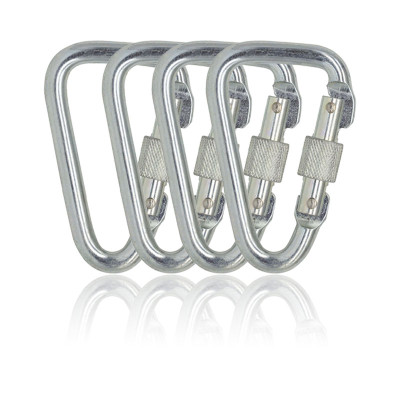
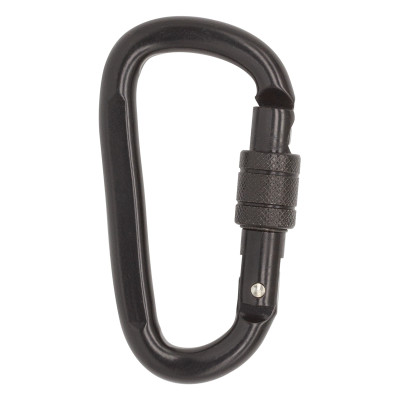
Why Surface Treatment Matters: Anodizing vs. Zinc Plating vs. Powder Coating for Safety Hardware
Surface treatment is an important consideration when sourcing metal components for safety harnesses, fall protection systems, rescue equipment, and other industrial applications.
Although material strength and component design are critical, corrosion resistance also affects the durability, appearance, and long-term reliability of metal hardware. Components exposed to moisture, salt, industrial contaminants, or repeated handling may deteriorate if their materials and protective finishes are not properly selected.
For manufacturers of safety harnesses and personal protective equipment (PPE), three common surface treatment options are anodizing, zinc plating, and powder coating.
However, these processes work differently and are not interchangeable.
Anodizing is commonly used to improve the surface properties of aluminum components. Zinc plating provides corrosion protection for suitable steel components. Powder coating creates an organic protective layer that can provide a durable finish on properly pretreated metal surfaces.
Choosing the right treatment requires more than comparing colors or advertised salt spray hours. Buyers must consider the base material, operating environment, mechanical requirements, coating thickness, manufacturing process, and intended application.
This guide compares anodizing, zinc plating, and powder coating to help B2B buyers select appropriate corrosion protection for safety hardware.
1. How Corrosion Environments Affect Safety Hardware
Before selecting a surface treatment, manufacturers should understand the environment in which the finished product will operate.
A coating that performs well in a dry indoor environment may not provide the same protection in a coastal location or an industrial facility exposed to aggressive chemicals.
1.1 Dry Indoor Environments
Hardware used primarily indoors may experience relatively limited exposure to rain, salt, and other environmental contaminants.
Examples include:
Indoor industrial maintenance equipment
Components stored in controlled warehouses
Hardware used in dry manufacturing facilities
Selected indoor positioning and access systems
In these applications, corrosion protection may be less demanding than in outdoor environments.
However, indoor use does not eliminate corrosion risks. Condensation, cleaning chemicals, sweat, and improper storage can still affect metal surfaces.
Buyers should also consider how frequently the hardware will be handled, cleaned, and inspected.
1.2 Outdoor Industrial Environments
Outdoor hardware may be exposed to rain, temperature fluctuations, airborne contaminants, and repeated wet-dry cycles.
Typical applications include:
Construction safety harnesses
Telecommunications tower maintenance
Wind turbine maintenance
Industrial access equipment
Outdoor utility work
In these environments, the protective finish should be selected according to the base material and the expected exposure conditions.
For example, zinc plating may be suitable for certain steel components, while anodizing is a common option for aluminum hardware.
Powder coating may also be appropriate when the substrate preparation, coating system, and component geometry support the required durability.
1.3 Coastal and Marine Environments
Coastal locations introduce a more demanding corrosion environment because airborne salt and salt deposits can accelerate deterioration of susceptible metals.
Potential applications include:
Port maintenance
Coastal construction
Offshore support operations
Marine industrial access
Equipment used near seawater
In these environments, buyers should pay particular attention to corrosion protection at edges, recesses, contact points, and areas where a coating may be damaged.
A coating that looks intact on a flat sample may perform differently on a finished component with holes, bends, corners, and complex geometry.
For aluminum components, an appropriately specified and sealed anodized finish may be worth evaluating. For steel components, the suitability of zinc plating or another qualified coating system depends on the steel grade, finish specification, and exposure conditions.
No single finish should be assumed suitable for every marine application.
1.4 Industrial and Chemical Exposure
Some industrial environments expose hardware to oils, cleaning agents, process chemicals, abrasive dust, or other contaminants.
The effect depends on the specific chemical, its concentration, exposure duration, and operating temperature.
For these applications, buyers should evaluate both corrosion resistance and chemical compatibility.
A coating designed for salt exposure does not automatically provide adequate protection against acids, alkalis, solvents, or other aggressive substances.
Where chemical exposure is expected, request technical compatibility information from the coating supplier and evaluate representative samples under the intended conditions.
1.5 Corrosion Environment Comparison
| Operating Environment | Main Risk Factors | Selection Considerations |
|---|---|---|
| Dry indoor use | Occasional moisture, condensation, handling | Basic corrosion protection may be sufficient, depending on the substrate |
| Outdoor industrial use | Rain, humidity, temperature changes | Evaluate coating durability and protection at edges and recesses |
| Coastal environments | Salt deposits, moisture, repeated wet-dry cycles | Prioritize a qualified corrosion protection system and relevant test evidence |
| Chemical processing | Chemicals, cleaning agents, temperature | Verify chemical compatibility in addition to corrosion resistance |
| High-abrasion applications | Scratches, friction, repeated contact | Evaluate wear resistance and the effect of coating damage |
| Long-term outdoor storage | Weather exposure, condensation, damaged packaging | Consider the complete protection and storage system |
The first rule of surface treatment selection is simple: identify the operating environment before choosing the coating.
2. Anodizing vs. Zinc Plating vs. Powder Coating
Although all three processes can help protect metal surfaces, they differ in their substrates, coating structures, manufacturing requirements, and failure modes.
2.1 Anodizing: A Common Choice for Aluminum Hardware
Anodizing is an electrochemical process that forms a controlled oxide layer on the surface of a suitable metal, most commonly aluminum in industrial hardware applications.
Unlike paint or conventional plating, the anodic oxide layer is formed from the aluminum substrate itself.
This integrated surface structure helps the finish resist peeling or flaking under normal conditions.
Depending on the alloy and process, anodizing can improve corrosion resistance, surface durability, and appearance.
Key advantages of anodizing include:
Suitable for many aluminum components
Improved corrosion resistance when properly processed and sealed
Good resistance to surface wear for suitable anodizing specifications
Options for different colors and appearances
A finish that does not behave like a separate paint film
Anodizing is commonly considered for aluminum carabiners, pulleys, connectors, and other components where weight, appearance, and surface protection are important.
However, the final performance depends on the aluminum alloy, anodizing process, coating thickness, and sealing quality.
Not all aluminum alloys respond identically to anodizing. A color match on one alloy may not be reproduced exactly on another.
Buyers should also consider dimensional tolerances. Because anodizing changes the component's surface dimensions, critical openings, interfaces, and moving clearances should be reviewed during product development.
For fatigue-sensitive or highly loaded aluminum components, the effect of the specified surface treatment should be assessed as part of the engineering qualification process.
Best suited for: Appropriately designed aluminum hardware requiring corrosion protection, controlled appearance, and a durable surface finish.
2.2 Zinc Plating: Corrosion Protection for Steel Components
Zinc plating applies a zinc coating to a suitable steel surface, commonly through an electrochemical process.
Zinc helps protect steel because it acts as a sacrificial coating: under suitable conditions, zinc corrodes preferentially to the underlying steel.
This makes zinc plating a common option for many steel components used in industrial equipment.
Potential advantages include:
Corrosion protection for suitable steel substrates
Relatively thin coatings for applications with dimensional constraints
Options for different passivation and supplementary finishes
A metallic appearance
Potentially competitive cost for suitable production volumes
However, zinc plating performance depends on more than the presence of zinc.
Important variables include coating thickness, pretreatment, passivation, supplementary sealing, surface condition, and process consistency.
For example, zinc corrosion products may appear as white deposits before red rust develops on the underlying steel. White corrosion does not necessarily mean the steel substrate has already rusted, but its significance depends on the product specification and acceptance criteria.
Zinc plating also requires special attention when used on high-strength steel components.
Cleaning and electroplating processes can introduce hydrogen into susceptible steels, creating a risk of hydrogen embrittlement. Depending on the material and applicable specification, risk mitigation may require qualified processing, controlled post-plating baking, and appropriate verification.
For load-bearing safety hardware, the surface treatment process must be reviewed with the component's engineering and quality requirements in mind.
Best suited for: Suitable steel hardware requiring corrosion protection and a relatively thin metallic finish, provided the coating process is compatible with the material and intended application.
2.3 Powder Coating: A Protective Organic Finish
Powder coating applies a dry coating material to a prepared surface, commonly using electrostatic application followed by curing.
The resulting polymer film can provide a durable finish, attractive appearance, and a protective barrier against environmental exposure.
Depending on the coating chemistry and process, powder coating may offer:
A wide range of colors and finishes
Good appearance consistency with controlled production
Useful protection against environmental exposure
Good durability for suitable applications
Opportunities for product identification and visual differentiation
However, powder coating depends heavily on substrate preparation, coating coverage, curing conditions, and film quality.
Poor pretreatment or inadequate coverage can reduce corrosion resistance. Scratches, chips, and damaged edges may expose the underlying metal, allowing corrosion to develop beneath or around the coating.
The thickness of powder coating also matters.
On precision hardware, an excessively thick coating may affect clearances, assembly dimensions, connector interfaces, or moving parts.
For this reason, powder coating should not automatically be applied to every surface of a load-bearing component. Functional areas and contact surfaces must be reviewed, and any treatment used on safety-critical hardware must be validated for the intended design.
Best suited for: Suitable metal components requiring a colored protective finish, particularly when the substrate preparation, coating coverage, and functional dimensions can be properly controlled.
2.4 Comparison of the Three Surface Treatments
| Factor | Anodizing | Zinc Plating | Powder Coating |
|---|---|---|---|
| Common substrate | Aluminum | Steel | Suitable steel, aluminum, and other compatible substrates |
| Coating structure | Electrochemically formed oxide layer | Metallic zinc coating | Organic polymer film |
| Main purpose | Improve surface protection and appearance | Protect suitable steel against corrosion | Provide a protective barrier and decorative finish |
| Color options | Available, depending on process and alloy | Usually metallic finishes, with options depending on supplementary treatments | Broad range of colors and finishes |
| Typical concern | Alloy compatibility, sealing, dimensional and fatigue effects | Coating thickness, passivation, hydrogen embrittlement risk | Pretreatment, edge coverage, chipping, thickness |
| Damage behavior | Local surface damage can expose the substrate | Local damage may reduce protection, although zinc can provide sacrificial protection | Scratches or chips may expose the substrate |
| Important quality checks | Thickness, sealing, appearance, corrosion performance | Thickness, passivation, adhesion where applicable, corrosion performance, process control | Film thickness, adhesion, cure, coverage, corrosion performance |
| Typical applications | Aluminum hardware and components | Suitable steel hardware | Selected protective or decorative metal components |
There is no universally best option.
The appropriate treatment depends on the base material, geometry, functional requirements, exposure conditions, and required evidence of performance.
3. How to Interpret Salt Spray Test Results
Salt spray testing is widely used to evaluate the corrosion performance of metals and protective coatings under controlled laboratory conditions.
For industrial hardware suppliers, it can help identify coating defects, assess process consistency, and verify whether samples meet agreed acceptance criteria.
However, buyers must understand what salt spray results can—and cannot—tell them.
3.1 What Is a Salt Spray Test?
Salt spray testing exposes specimens to a controlled corrosive atmosphere containing a salt solution.
Two commonly referenced standards are:
ASTM B117, which describes the operation of salt spray testing equipment and the test environment.
ISO 9227, which specifies procedures for neutral salt spray, acetic acid salt spray, and copper-accelerated acetic acid salt spray testing.
The appropriate method depends on the product specification and the purpose of the evaluation.
Neither a standard name nor a reported number of exposure hours is sufficient by itself to establish that a component is suitable for a particular application.
The buyer and supplier must agree on the relevant test method, specimen preparation, exposure duration, evaluation criteria, and acceptance requirements.
3.2 What Do Salt Spray Results Look Like for Different Coatings?
The following table describes typical observations that may be relevant during testing. These are general indicators, not guaranteed outcomes for every coating system.
| Surface Treatment | Possible Signs of Deterioration | What Buyers Should Evaluate |
|---|---|---|
| Anodizing | Localized corrosion, pitting, discoloration, or defects in the oxide layer | Coating specification, sealing quality, substrate condition, and corrosion acceptance criteria |
| Zinc plating | White corrosion products, followed in more severe cases by red rust on the steel substrate | Zinc coating thickness, passivation, supplementary finish, and agreed white-rust or red-rust criteria |
| Powder coating | Blistering, peeling, corrosion at damaged areas, or corrosion spreading from a scribe | Pretreatment, film thickness, adhesion, edge coverage, and corrosion progression |
A supplier should explain how the test results were evaluated rather than simply stating that a sample passed a particular number of hours.
3.3 Why Salt Spray Hours Cannot Be Compared Directly
One of the most common mistakes in surface treatment procurement is comparing salt spray hours without considering the test conditions and acceptance criteria.
For example, a claim of 240 hours of salt spray resistance does not automatically mean that a coating will last twice as long in service as a coating tested for 120 hours.
Real operating environments involve changing temperatures, humidity, contamination, abrasion, mechanical damage, and wet-dry cycles. A laboratory salt spray chamber cannot reproduce every combination of these factors.
ISO 9227 also cautions against using salt spray results as a universal way to rank different materials or predict their long-term corrosion resistance.
Therefore, salt spray hours should be treated as one part of a defined testing and quality control program—not as a direct measurement of product service life.
3.4 What Should a Salt Spray Test Report Include?
When evaluating a supplier's corrosion protection capability, request a report that identifies:
1. Test standard: The specific method used, such as ASTM B117 or ISO 9227.
2. Base material: The metal grade or material designation of the test specimen.
3. Surface treatment: The complete coating or finishing specification.
4. Coating thickness: The measured thickness or applicable acceptance range.
5. Specimen preparation: Whether the specimen was a production component, a representative coupon, or another sample type.
6. Exposure duration: The actual time in the test chamber.
7. Acceptance criteria: The permitted corrosion, discoloration, blistering, or other defects.
8. Test results: Observations and measurements recorded during and after testing.
9. Traceability: Identification of the relevant production batch or coating process where applicable.
Where the component geometry is complex, testing representative production parts can provide additional information that flat test panels may not reveal.
For example, holes, edges, recesses, and contact points may behave differently from large, flat surfaces.
3.5 How to Specify Salt Spray Requirements for OEM Projects
For OEM and ODM hardware projects, corrosion requirements should be established before mass production.
Instead of asking a supplier for the highest possible salt spray rating, define the actual requirements for the application.
A useful specification should address:
The intended operating environment
The substrate and material grade
The required surface treatment
The coating thickness or applicable process specification
The test method
The exposure duration
The acceptance criteria
The sampling and inspection plan
The documentation required for production approval
This approach makes supplier quotations easier to compare and reduces the risk of receiving products that meet a test-hour claim but do not meet the actual project requirements.
4.Best Surface Treatment Options by Industry
The right surface treatment depends on the combination of material, environment, and product function.
The following recommendations are starting points for supplier discussions, not universal approvals for every product.
4.1 Construction and General Industrial Fall Protection
Construction and industrial safety hardware may be exposed to rain, dust, sweat, handling, and repeated contact with other equipment.
For suitable steel components, zinc plating may be an option where its corrosion performance, material compatibility, and process controls meet the requirements.
For aluminum components, anodizing may provide a suitable combination of surface protection and appearance.
Powder coating may be appropriate for selected components where the finish does not interfere with load-bearing interfaces, connector movement, inspection, or other functional requirements.
Buyers should evaluate the complete component rather than selecting a finish based only on its appearance.
4.2 Rope Access, Rescue, and Weight-Sensitive Equipment
Rope access and rescue equipment may place a premium on low weight, handling characteristics, and durable surface finishes.
Anodizing is commonly considered for appropriately designed aluminum components because it can provide a durable oxide finish while retaining the advantages of the aluminum substrate.
However, the suitability of the aluminum alloy, component design, coating process, and complete product qualification remains essential.
A colored finish should never be treated as proof of mechanical performance or certification.
4.3 Coastal and Marine Applications
Hardware used in coastal or marine environments may require more demanding corrosion protection than equipment used in dry indoor conditions.
For aluminum components, buyers may evaluate anodizing specifications, including coating thickness and sealing requirements.
For steel components, the suitability of zinc plating or an alternative coating system should be assessed against the actual exposure conditions and required service performance.
Additional considerations may include:
Salt deposition
Persistent moisture
Crevices and trapped water
Coating damage during handling
Corrosion at edges and interfaces
Maintenance and inspection requirements
A supplier should provide test evidence relevant to the specified coating system rather than relying on general claims that a finish is suitable for marine use.
4.4 Electrical Utility and Specialized Industrial Applications
Electrical utility and specialized industrial applications may impose additional functional requirements on safety hardware.
For example, some products may need controlled electrical insulation characteristics, specialized materials, or specific performance under defined operating conditions.
In these cases, surface treatment selection must be coordinated with the component's engineering requirements.
A powder-coated or anodized surface should not automatically be assumed to provide an approved dielectric function.
If electrical insulation performance is required, it must be established through the applicable product design, test method, and qualification process.
4.5 OEM and Private-Label Hardware
For PPE brands and safety harness manufacturers developing private-label products, surface treatment can also support visual consistency and product differentiation.
Possible considerations include:
Brand-specific colors
Consistent appearance across production batches
Corrosion protection for the intended market
Compatibility with laser marking or other identification methods
Coating thickness and dimensional tolerances
Sample approval before mass production
Repeatability across manufacturing batches
For OEM projects, the approved finish should be recorded in the product specification.
Any subsequent change in material, coating thickness, process, or finishing supplier should be reviewed through the appropriate engineering and quality control procedures.
4.6 Industry-Based Selection Guide
| Industry or Application | Possible Starting Point | Key Considerations |
|---|---|---|
| General industrial fall protection | Zinc-plated steel or anodized aluminum, depending on the component | Material compatibility, environmental exposure, and functional requirements |
| Construction hardware | Qualified zinc plating for suitable steel components; anodizing for suitable aluminum components | Rain, abrasion, contamination, and coating damage |
| Rope access and rescue | Anodizing for suitable aluminum components | Weight, surface durability, dimensional tolerances, and product qualification |
| Coastal and marine operations | A qualified corrosion protection system selected for the substrate | Salt exposure, trapped moisture, corrosion testing, and maintenance |
| Electrical utility equipment | Treatment specified for the product's complete functional requirements | Electrical performance must be verified separately where applicable |
| OEM and pricate-label products | Any suitable, validated treatment | Color consistency, repeatability, documentation, and approved samples |
The final decision should always be based on the component's intended use and verified performance requirements.
5. A Practical Checklist for Evaluating Surface Treatment Suppliers
For B2B buyers, the quality of the finishing process can be as important as the coating type.
Before approving a supplier, consider the following questions.
Material and Process
Is the base material clearly specified?
Is the proposed surface treatment suitable for that material?
Is the coating specification documented?
Are pretreatment and finishing processes controlled?
Are critical dimensions checked after finishing?
Are coating defects inspected and recorded?
Corrosion Testing
Which salt spray test method is used?
What exposure duration is specified?
What constitutes an acceptable result?
Are white rust, red rust, pitting, blistering, and coating damage evaluated as appropriate?
Are test reports available?
Can the results be linked to production batches?
Safety and Functional Compatibility
Could the treatment affect load-bearing performance?
Could coating thickness interfere with connector openings or moving parts?
Are webbing contact surfaces properly finished?
Is the process suitable for the specified steel strength or aluminum alloy?
Has the finished component been reviewed within the relevant product qualification process?
OEM Support
Can the supplier provide samples before mass production?
Can the supplier meet agreed color and appearance requirements?
Are changes to the coating process controlled?
Can technical documentation be provided?
Can the supplier maintain consistent quality across repeat orders?
These questions help buyers assess more than appearance or price. They support a more systematic approach to supplier qualification and production quality.
Conclusion
Choosing the right surface treatment is an important part of developing durable and reliable safety hardware.
Anodizing, zinc plating, and powder coating offer different advantages, and each must be evaluated according to the base material, operating environment, component geometry, and functional requirements.
Anodizing is commonly used for aluminum hardware where a durable oxide finish and controlled appearance are required. Zinc plating can provide corrosion protection for suitable steel components, but the coating specification and risks associated with processing high-strength steel must be addressed. Powder coating offers a wide range of protective and decorative finishes, provided that surface preparation, coating coverage, and dimensional requirements are properly controlled.
Salt spray testing can help verify coating quality and support supplier qualification. However, the number of test hours alone does not establish real-world service life or prove that one coating system is universally superior to another.
For safety harness manufacturers, PPE brands, and fall protection equipment suppliers, the best approach is to define the operating environment, specify the required finish, agree on test methods and acceptance criteria, and verify that the treatment is compatible with the finished component.
The right surface treatment is not simply the one that looks best or achieves the highest advertised salt spray hours. It is the one that meets the defined requirements and performs reliably in the intended application.
Call to Action
Request Surface Treatment Samples
Are you sourcing corrosion-resistant hardware for safety harnesses, fall protection systems, rescue equipment, or other industrial applications?
Choosing the right surface treatment can help improve product durability, maintain consistent appearance, and support your OEM quality requirements.
We welcome discussions with safety harness manufacturers, PPE brands, and industrial hardware buyers who need surface treatment options for their product development projects.
Depending on the component design and material, potential options may include:
Anodized aluminum hardware
Zinc-plated steel components
Selected powder-coated metal components
Customized finish and color options
Sample evaluation before mass production
Technical documentation and agreed corrosion testing support
Request surface treatment samples to evaluate the finish, appearance, and compatibility with your application.
When contacting our team, please share your component drawings or product model, base material, intended operating environment, target market, and any required corrosion test specification.
This information will help us assess suitable surface treatment options for your next hardware sourcing project.